
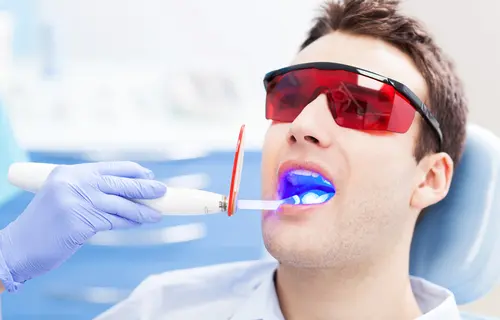
A whiter smile is one of the most requested cosmetic improvements, but many patients hesitate out of a single worry: will whitening damage my enamel? It is a fair question, and one we hear often at Infinite Dental Wellness in Glendale, CA. The reassuring answer is that professional teeth whitening, used as directed, is both safe and effective for the vast majority of people. Understanding how whitening actually works, and where the real risks lie, will help you brighten your smile with confidence. Dr. Leon Kiraj and Dr. Liana Muradyan walk every patient through the process so you know exactly what to expect.
How Teeth Whitening Works
Most professional whitening relies on a peroxide-based gel, either hydrogen peroxide or carbamide peroxide. These compounds release oxygen molecules that penetrate the porous surface of the enamel and break apart the stain molecules trapped within the tooth. Importantly, this chemical reaction lifts and dissolves stains rather than scraping or grinding the enamel away. The structure of the tooth itself remains intact; only the discoloration is removed. This is why whitening can dramatically brighten a smile without physically thinning the enamel.
Stains generally fall into two categories, and whitening addresses both. Extrinsic stains sit on the surface and come from foods, drinks, and tobacco, while intrinsic stains develop deeper within the tooth from aging, trauma, or certain substances. Surface stains are the easiest to lift, but peroxide can also reach many deeper discolorations that brushing alone never touches. Knowing which type you have helps set expectations for how dramatically your teeth will respond to treatment.
Does Whitening Harm Enamel?
When performed by a dental professional or with dentist-supervised products, whitening does not erode or weaken enamel. Decades of clinical use support its safety. The temporary effects people notice, such as sensitivity, come from the teeth being briefly more porous during treatment, not from permanent structural damage. After whitening, the enamel rehydrates and remineralizes, and any sensitivity typically fades within a day or two. The key is using the correct concentration and following the recommended schedule, which is exactly where professional supervision makes the difference.
It is easy to confuse whitening with abrasive cleaning, but they are not the same thing. Peroxide whitening works chemically, dissolving stain molecules without touching the enamel's surface. Some whitening toothpastes and DIY trends, on the other hand, rely on rough abrasives or acidic ingredients that can genuinely scratch or thin enamel over time. Understanding that distinction explains why professionally guided peroxide whitening is gentle on your teeth while certain at-home shortcuts are not.
Where the Real Risks Come From
Most whitening problems trace back to misuse rather than the treatment itself. Knowing the pitfalls helps you avoid them and protect your smile.
- Overusing whitening products or leaving them on longer than directed
- Using high-concentration gels without professional guidance
- Whitening teeth that have untreated cavities or gum disease
- Relying on harsh, abrasive DIY methods that scratch enamel
- Ignoring sensitivity and continuing to whiten through discomfort
Common Side Effects and How to Manage Them
The two most common side effects of whitening are temporary tooth sensitivity and mild gum irritation, both of which resolve on their own. Sensitivity occurs because the whitening process temporarily opens the microscopic channels in the enamel, while gum irritation can happen if gel contacts the soft tissue. The good news is that these effects are short-lived and easy to minimize with a few simple steps.
- Use a desensitizing toothpaste for a week or two before and after whitening
- Avoid very hot or cold foods and drinks during treatment
- Follow the recommended timing and do not exceed the suggested frequency
- Apply gel carefully with custom trays to keep it off the gums
- Tell your dentist about any sensitivity so the plan can be adjusted
Why Professional Whitening Is the Safest Choice
While store-bought strips and gels can lighten teeth, professional whitening offers a level of safety and control that over-the-counter products cannot match. Before any treatment, we examine your teeth and gums to confirm that whitening is appropriate, protect your soft tissues, and select the right concentration for your needs. Whether you choose an in-office Zoom teeth whitening session for fast results or a custom take-home tray system, the treatment is tailored to your enamel and monitored for safety. Patients who first address issues like cavities or gum disease also get healthier, more even results. For a more dramatic smile transformation, whitening can even be combined with other cosmetic options as part of a smile makeover.
Who Should Be Cautious With Whitening
While whitening is safe for most people, it is not the right fit for everyone, and a quick exam helps determine whether you are a good candidate. People with significant tooth sensitivity, untreated cavities, worn enamel, or active gum disease should address those issues first, because whitening agents can cause pain when they reach exposed dentin or inflamed tissue. Whitening is also generally postponed during pregnancy as a precaution.
It also helps to have realistic expectations about what whitening can and cannot do. Whitening lightens natural tooth enamel, but it does not change the color of crowns, veneers, or fillings, so patients with visible restorations may notice an uneven result and should plan accordingly with their dentist. Likewise, some discoloration caused by certain medications, injury, or naturally gray-toned teeth responds less predictably to whitening, and alternatives such as cosmetic bonding or veneers may deliver a better outcome. A professional consultation clears up these questions before you start, so you invest in the approach most likely to give you the smile you want.
Keeping Your Results Bright
After whitening, a few simple habits will help your results last. Limit staining foods and drinks like coffee, red wine, and dark berries, rinse with water after consuming them, avoid tobacco, and maintain excellent daily brushing and flossing. Regular cleanings at your Glendale dentist remove the surface stains that accumulate over time and keep your smile looking its best.
Teeth whitening is a safe, proven way to brighten your smile when it is done correctly. If you are ready to whiten with confidence and want a treatment customized to protect your enamel, the team at Infinite Dental Wellness in Glendale, CA is here for you. Call us today at (818) 541-1110 to schedule a consultation with Dr. Kiraj or Dr. Muradyan and discover the safest path to a brighter smile.