
If your gums bleed when you brush or look red and puffy, you may have gingivitis, the earliest stage of gum disease. The best news about gingivitis is that it is reversible. With the right combination of daily care and professional treatment, you can restore your gums to full health and prevent the condition from progressing into something more serious. At Infinite Dental Wellness in Glendale, CA, Dr. Leon Kiraj and Dr. Liana Muradyan help patients turn gingivitis around with simple, practical steps. Here is what you need to know to get your gums back on track.
What Is Gingivitis?
Gingivitis is inflammation of the gums caused by plaque, a sticky film of bacteria that constantly forms on your teeth. When plaque is not removed thoroughly, it irritates the gum tissue and triggers redness, swelling, and bleeding. At this stage, the bone and connective tissue that support your teeth have not yet been affected, which is why gingivitis can be reversed. If it is ignored, however, it can advance to periodontitis, a more severe form of gum disease that causes permanent damage.
The key thing to understand about gingivitis is that it is driven by bacteria, and bacteria respond to consistent removal. When you disrupt that plaque every day, the gums have a chance to calm down and heal. When the plaque is left in place, it continues to inflame the tissue and eventually hardens into tartar that you cannot remove on your own. This is why reversing gingivitis is really a combination of better daily habits at home and a professional reset in the dental chair.
Signs you may have gingivitis
- Gums that bleed during brushing or flossing
- Red, swollen, or puffy gums
- Tenderness or mild irritation along the gum line
- Persistent bad breath
- Gums that look shiny instead of firm and pink
Step One: Improve Your Daily Oral Hygiene
The foundation of reversing gingivitis is removing plaque consistently and gently every day. Most cases of gingivitis improve dramatically once daily habits become more thorough. The goal is to disrupt the bacteria along and just below the gum line without damaging the delicate tissue.
Build a stronger home routine
- Brush twice a day for a full two minutes with a soft-bristled toothbrush
- Angle the brush toward the gum line and use gentle, circular motions
- Floss once a day to clean between teeth where a brush cannot reach
- Add an antimicrobial mouth rinse if your dentist recommends one
- Replace your toothbrush every three to four months for effective cleaning
You may notice some bleeding when you first improve your routine. This is common and usually subsides within a week or two as your gums become healthier. If bleeding continues, let us know. The most important thing is to keep going rather than backing off the area that bleeds, since gentle, consistent cleaning is exactly what those inflamed gums need to recover.
Step Two: Get a Professional Cleaning
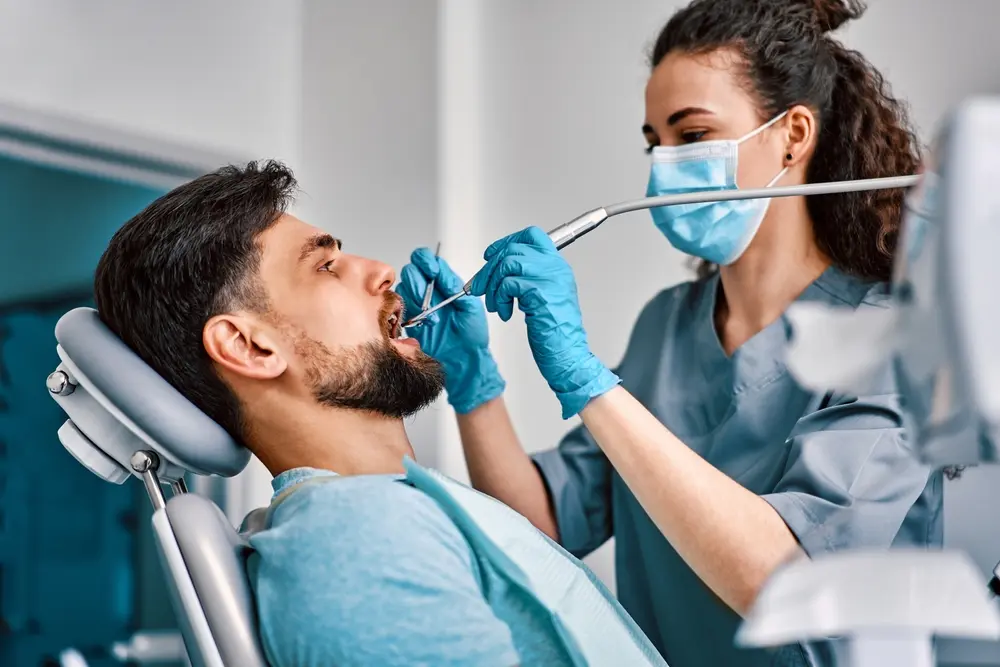
Home care is essential, but it cannot remove tartar, the hardened plaque that forms when soft plaque is left undisturbed. Tartar can only be removed by a dental professional. A thorough professional cleaning eliminates the buildup that fuels gum inflammation and gives your gums the clean surface they need to heal. For many patients, a single cleaning combined with better home habits is enough to reverse gingivitis. During your visit, we also check for any spots you may be missing and offer personalized coaching on technique.
Think of the professional cleaning as a fresh start. Once the hardened deposits are gone, your daily brushing and flossing become far more effective because they are working on a clean surface rather than fighting against built-up tartar. We will also take the opportunity to look closely at the health of your gums, measure any pockets that have formed, and confirm that you are dealing with gingivitis rather than a more advanced stage. This combination of cleaning and evaluation is what makes a dental visit so valuable when you are trying to turn your gum health around.
Step Three: Support Your Gums With Healthy Habits
Beyond brushing and cleanings, your overall lifestyle plays a role in gum health. A few simple changes can speed your recovery and keep gingivitis from coming back.
- Eat a balanced diet rich in vitamins and limit sugary, starchy snacks
- Drink plenty of water to rinse away food particles and bacteria
- Avoid tobacco, which weakens gums and slows healing
- Manage conditions like diabetes that can affect gum health
- Keep up with regular dental checkups and cleanings
When to See Your Dentist
If your gum symptoms do not improve within a couple of weeks of better home care, or if they get worse, it is time for a professional evaluation. Persistent bleeding, gums that are pulling away from the teeth, or loose teeth are signs the condition may have advanced beyond gingivitis. In those cases, we may recommend a deeper cleaning such as scaling and root planing to remove buildup below the gum line. Acting promptly keeps the problem from progressing and protects your long-term oral health. There is no downside to having your gums checked, and a quick visit can give you peace of mind or catch a developing problem while it is still easy to treat.
It is also worth remembering that gingivitis can come back if old habits return, so the goal is not just to clear it up once but to keep it from returning. Once your gums are healthy again, maintaining your daily routine and keeping up with regular cleanings will protect the progress you have made. Small, consistent efforts each day add up to gums that stay firm, pink, and free of bleeding for the long term.
Reversing gingivitis is absolutely possible, and the sooner you start, the easier it is. If your gums are red, swollen, or bleeding, the team at Infinite Dental Wellness can help you restore them to full health. Call our Glendale office today at (818) 541-1110 to schedule a cleaning and exam with Dr. Kiraj or Dr. Muradyan, and take the first step toward a healthier smile.