
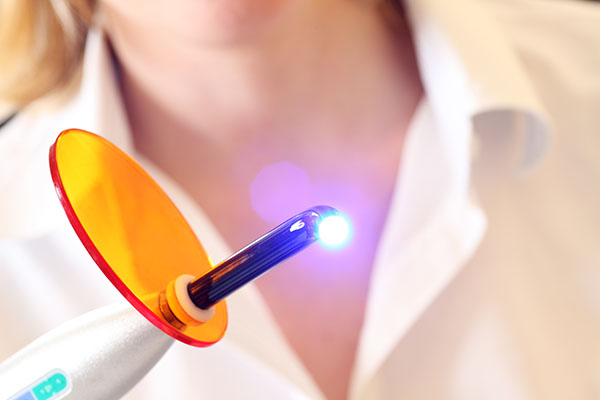
Many dentists are putting down their drills and other equipment and turning to laser dentistry to treat gum disease, tooth decay, hypersensitivity and other issues. Lasers are quite a bit different than other dental equipment and offer some benefits that patients appreciate. Find out how this form of dentistry is different from traditional dental treatments.
How laser dentistry works
Dentists use small lasers that emit focused beams of light. These beams of light can remove or alter tissue, and even eliminate decay to prepare a tooth for a filling. This process is less invasive than traditional dental treatments.
Benefits of laser surgery
Lasers offer benefits that are not available with traditional dental treatments. The benefits illustrate how different lasers are from other treatment options.
Less likely to need sutures
Invasive dental procedures typically require several sutures to promote proper healing. Lasers are not as invasive, so this treatment is less likely to require sutures. That means the healing process is typically faster and less painful when lasers are used in the dental procedure.
Might not need anesthesia
Many patients do not like the idea of getting shots at the dentist. Even those who do not mind the shots typically do not enjoy feeling numb when they leave the office. Lasers might be the answer for these patients.In many cases, anesthesia is not needed with laser dentistry. When it is, it is usually far less than what is required with traditional dental treatments. That means the numbing agent wears off faster.
Less likely to get an infection
Infections are a concern with some dental procedures. Fortunately, lasers sterilize the gums. That lessens the likelihood of infections and other complications. This makes the healing process much easier for patients.
Less damage to surrounding tissue
Drills and scalpels can cause some damage to the surrounding tissues during a dental procedure. Lasers are trained in a very small area, so the damage is limited.
Less blood
Some dental procedures cause bleeding. For instance, reshaping the gums can cause the soft tissue to bleed. Lasers actually promote blood clotting. That lessens the amount of blood loss during the dental treatment. This also makes it easier for patients to heal after the treatment. Less stress
Ready when you are. Our team at Infinite Dental Wellness makes scheduling a breeze and welcomes new patients for cleanings, cosmetic care, or dental emergencies.